writer - free thinker - factualist
some cages have no bars
Go directly to my Substacks or take a deep dive ↓
the person
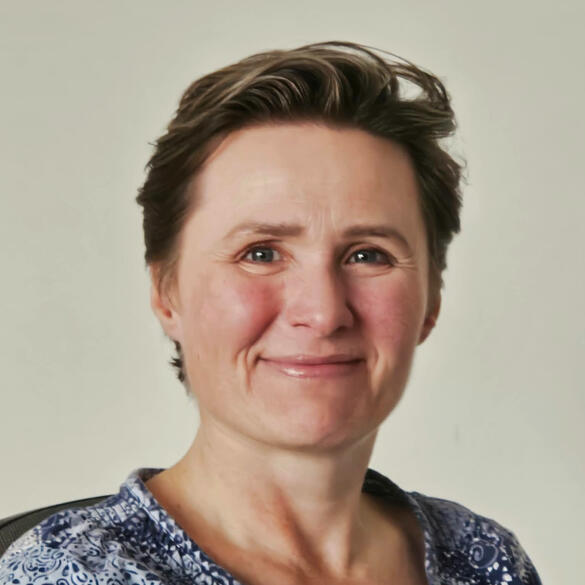
from forensic accountant to writer
For fifteen years, I worked as a forensic accountant, served as a court-appointed expert and lectured at university.Illness brought that chapter of my professional life to an end. It took three years and consultations with more than twenty medical specialists before I was diagnosed with multiple sclerosis. An MRI could have revealed it in a day.That experience changed the way I looked at institutions and the systems people depend on. It made me more aware of the gap that can emerge between what systems are designed to do and how they work in practice, particularly when procedures and protocols leave too little room for individual circumstances.The subjects have changed, but my method has not. I go back to original sources, examine the available information and place findings in their broader context. I approach events from different angles, look for connections and pay particular attention to facts and sources that add nuance to or challenge the prevailing picture, especially when those facts and sources receive little attention in mainstream coverage.
the vision
the method
my contribution to rebuilding common ground
Most of the news that reaches us today is accurate, and that is precisely the problem. News reports, opinion pieces and commentaries each offer a particular account, often built from facts that are individually correct and verifiable. Yet the selection of what is included, what is left out and how those facts are presented can create a very misleading picture. When relevant background, inconvenient facts or other sides of a story are missing, individually accurate fragments can distort our understanding of events. What is omitted can shape that understanding just as much as what is included.This has consequences for how we understand events and discuss them. When only one side of a story is presented, important facts and context that might challenge or complicate that account tend to be overlooked. Different groups can then end up with very different versions of the same events. Disagreement shifts from how those events should be interpreted to what actually happened in the first place. Instead of debating different perspectives and conclusions, we find ourselves defending competing versions of reality. Meaningful debate breaks down, disagreements become irreconcilable, and deep rifts emerge between us.My contribution is to help rebuild common ground by bringing facts and context back into the discussion. An open society depends on different perspectives and the freedom to disagree. A shared factual starting point allows us to debate priorities, interpretations and solutions without losing sight of what we have in common.
the articles
the prison we build ourselves
Open societies do not lose their strength and freedom overnight. Their decline is a gradual process, shaped by the concentration of wealth and power, growing technocratic and institutional control, and the erosion of independent thinking and personal responsibility. The pursuit of safety and progress, combined with indoctrination, propaganda and the increasing influence of bureaucratic systems, can further weaken the foundations of open societies and entrench existing power structures.I maintain two free Substacks, one in Dutch and one in English, exploring Western decline from different angles.The Dutch Substack focuses on how technocracy and bureaucracy affect society and everyday life, how the outsourcing of personal responsibility leads to increasingly intrusive systems of rules and control, and why these systems so often fail to solve the problems they are meant to address.The English Substack examines Western decline through its historical and geopolitical dimensions, exploring the erosion of freedom, the struggle to maintain existing power structures, and the loss of hegemony in a changing world. It draws comparisons with great civilizations of the past to examine the dynamics behind their rise, dominance and eventual decline.Visit my Substacks using the buttons below.
the books
the future you fear is already here
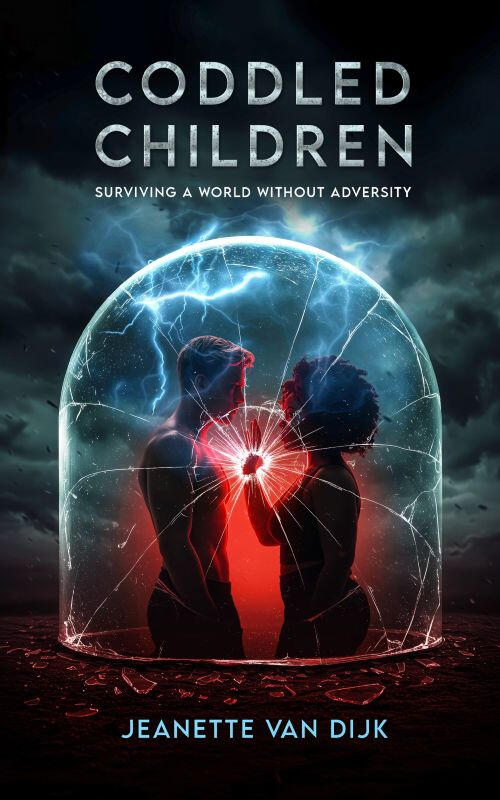
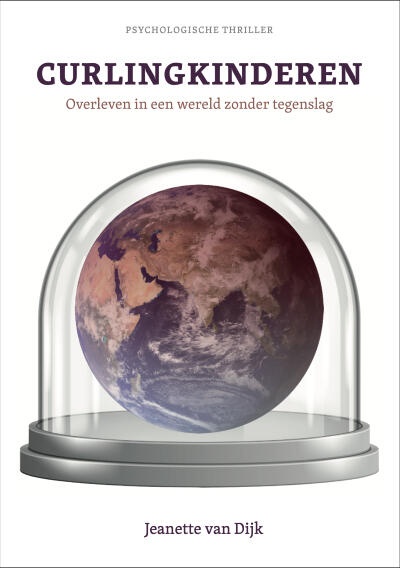
I wrote a novel about the battle between equality and liberty, a battle Western civilization is losing to equality, at the cost of our individual freedom. The book is set in a post-nuclear world where inequality and risk-taking have been completely abolished, leaving a tightly controlled society where free thought and free will itself have become the enemy. Below you will find the English edition Coddled Children and the Dutch edition Curlingkinderen as well as the links to buy a digital or physical copy.
What happens when equality becomes tyranny?